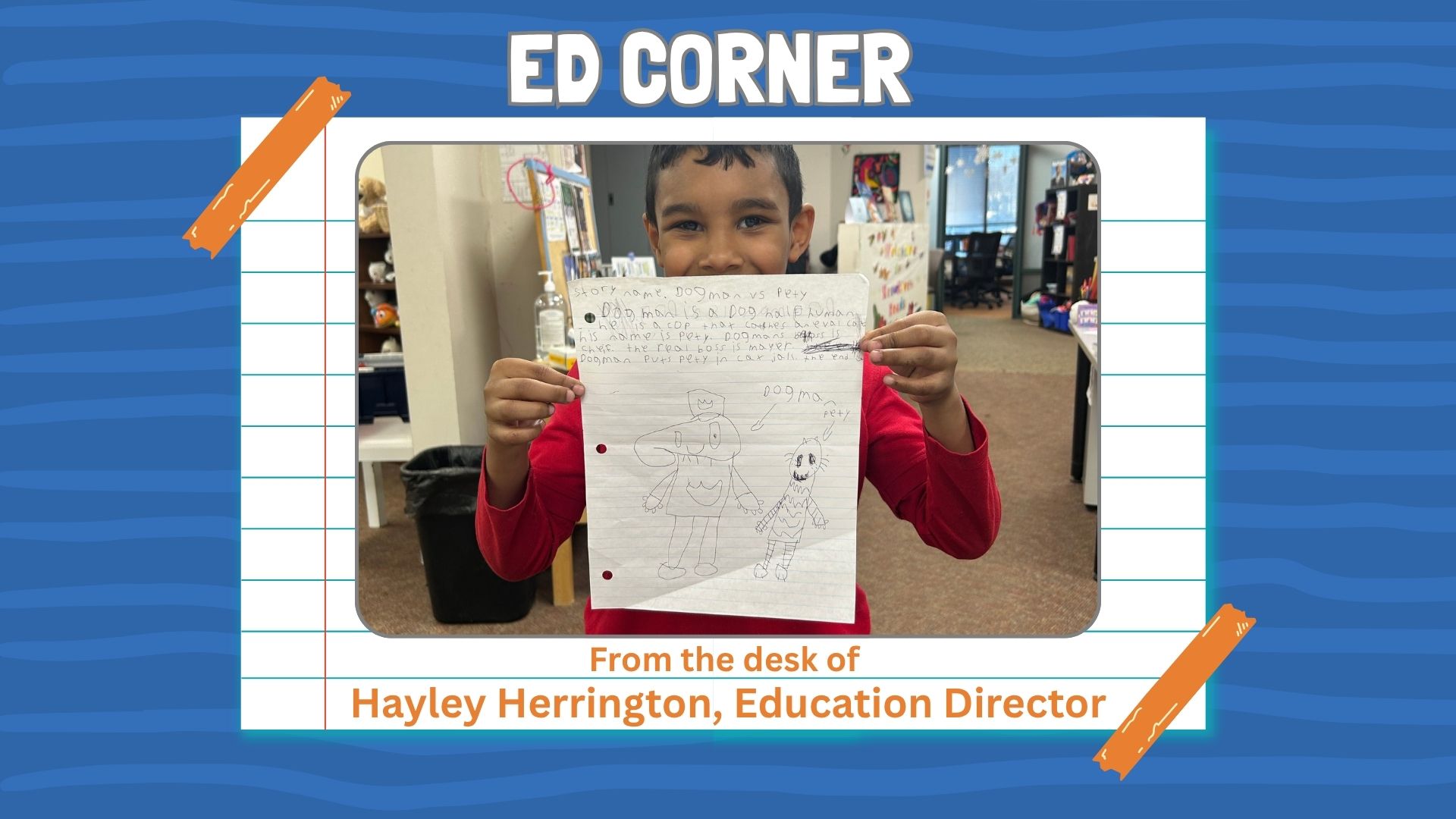
Handwriting matters.
As you may have read in a previous edition of the Ed Corner or have heard at Tutor Training, there are 26 letters in the English alphabet. Not only do these symbols represent the 44 sounds of our language, but when used in written form as words in sentences, they allow us to communicate with others and express thoughts, ideas and even feelings.
Per Dr. Stephanie Stollar from the Reading Science Academy, “It turns out that learning handwriting may recruit the same brain network as letter recognition”. That being said, practicing handwriting during your NHR sessions would be a valuable use of time. Not only will that support your student’s growth both as a reader and as a writer, but it also helps to engage various other mental processes connected to learning including memory and the manipulation of letter sounds.
When might you practice handwriting at NHR? Certainly, students can and should work on their letter formation while working in their workbooks. (You likely have even heard your site staff or the Ed team encourage a slower pace during this portion of the hour; this is a way to do so.) Perhaps your student is not currently working on their Lexia program. This would be a great opportunity to maximize instructional time to dictate a poem or even song lyric to your student. What a great way to practice spelling new words and talk about new vocabulary while simultaneously practicing handwriting!
→ Interested in learning even more? Check out the Edutopia article, Why Writing by Hand Beats Typing (in 6 Charts). As noted in the byline of the article, “Typing may be faster, but the research shows that handwriting engages our brains in richer, more meaningful ways.”